
On September 10, 2025, my thoughts were on my youngest son, Trey, who was turning 21 that day and starting his junior year as a musical theater performer at Indiana University. As a father, I reflected on the trajectory of his young life, feeling overwhelmingly proud of the man he was becoming, embodying the essence of civic virtue in his passions and pursuits.
Then the news broke: Charlie Kirk had been shot and killed while addressing students in Utah. I saw it unfold on Twitter (or X), and it was brutal. Outside of cinema, I had never witnessed such an intimate death.
Much like my feelings after the political violence earlier that year, which had claimed the lives of two Minnesota legislators, I was left heartbroken and disgusted. I wrestled with the same question that millions posed in that moment: What has our nation come to? It feels like a true Death of Compromise as we grapple with the implications of such tragic events.
Death of Compromise: A Call for Political Compromise

Disagreements within the political sphere have existed since the birth of the republic and beyond. But really, what has happened to us? What has tipped the scales so decidedly that we are resorting to political violence against those with whom we disagree? I don’t share Charlie Kirk's politics—in fact, I disagree with most of his positions. But he was practicing politics as the Framers intended. He was exercising his Constitutionally-given freedom of speech and trying to change hearts and minds. I respected what he was working to do, whether I agreed with his message or not.
Since when did expressing political views carry a death sentence? And why is violence becoming a troubling societal norm?
Democracy has always relied on faith in human restraint. The American system, more than most, was built, not on trust, but on tension. It was constructed on the belief that ambition, balanced against competing ambition, could channel our fallibility into a workable common good. Over two centuries later, that delicate machinery of self-government seems to have seized. My new book—"The Death of Compromise," now available on Amazon—serves as both a narrative history and a moral autopsy of how this decline has transpired.
America’s political decay did not begin with the internet, the 24-hour news cycle, or the latest populist wave. It began with a long, psychological and cultural transformation: the decline of compromise as a civic virtue.
The Founders viewed disagreement as inevitable, or even useful, but they also understood compromise as a moral discipline. It was seen as a necessary means of governing the passions that make freedom possible. Today, however, those passions are ungoverned. Political identity has become social identity, persuasion has given way to performance, and the lack of compromise has come to signify treason in a system driven by extremes on both the left and the right.
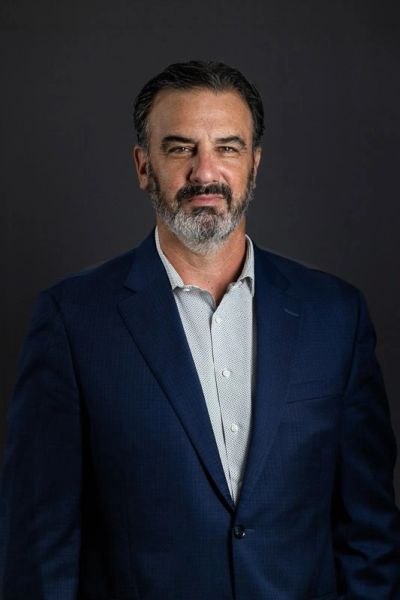
In researching “The Death of Compromise,” I had the privilege of speaking with notable figures such as former U.S. Senators Tom Daschle and John Danforth, energy executive William D. Johnson, former NRA lobbyist Adam Kaufman, retired U.S. Navy SEAL Dutch Van Horn, former Federal Reserve economist David Andolfatto, the Rev. Michael Trautman, former NPR anchor Jack Speer, and many others.
This book traces our decline through pivotal moments and individuals that have reshaped our civic virtue. It examines how the Southern Realignment categorized us into ideologically homogeneous factions; how C-SPAN turned congressional negotiation into performative theater; how partisan media and algorithms have weaponized our outrage; and how organizations like the NRA have perfected the approach of single-issue absolutism.
Throughout the narrative, I weave behavioral psychology and moral philosophy into the historical context. We must scrutinize how cognitive biases—such as confirmation bias, identity protection, and loss aversion—strengthen our tribalism, as well as how moral stories of purity versus corruption have taken over our civic debate. The argument is not partisan but rather diagnostic: the crisis of American democracy is not that one side has lost its virtue; rather, through my research, I discovered that both sides have abandoned the moral grammar that once made disagreement constructive.
The final chapters offer neither simple solutions nor empty platitudes. Instead, they strive to reclaim what compromise used to signify: not weakness, but a collective acknowledgment of shared moral limits. The book concludes by questioning whether a nation established on self-government can still navigate effectively when its citizens no longer believe in self-restraint.
“The Death of Compromise” provides both explanations and reflections. It encourages readers to view America’s divisions not as a mere accident but as the result of losing a vital civic habit—and prompts us to consider what it will take to restore it.
Of course, I hope you read it. It might earn me dozens of pennies. Dozens! But more importantly, I hope it inspires you to reflect on our current state. Not about your political positions—since I have no intention of changing those. Instead, I invite you to consider our trajectory as human beings, why political violence has emerged as a method of mediation rather than a last resort for defense, and what power each of us holds to influence our present path.
Thank you.